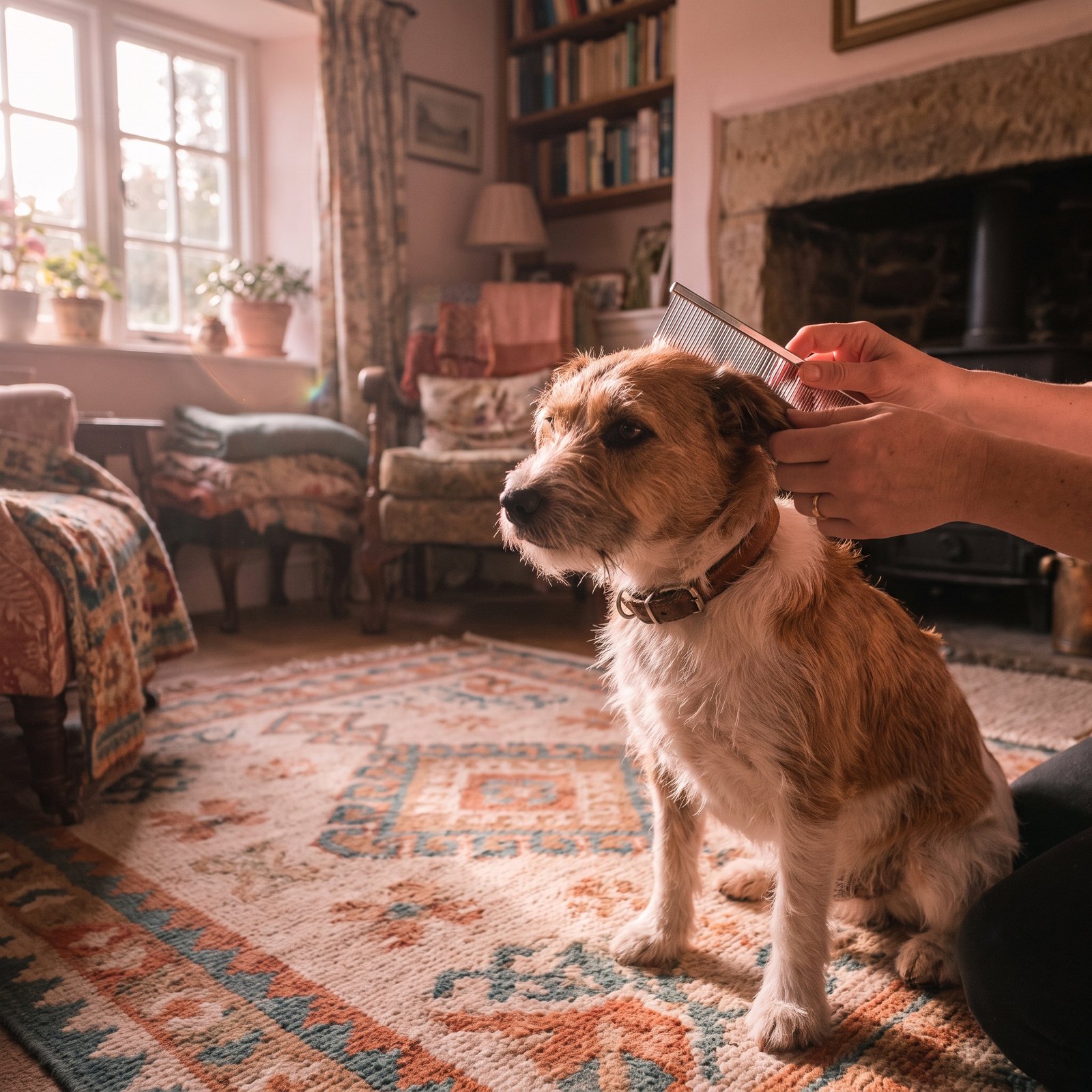
You run the brush over her, it looks fine on top, and then your fingers find it. A hard little lump of matted fur, tucked behind her ear or up in her armpit, that the brush has skated straight over. You try to work it loose, she yelps, and you stop before you’ve even started. Sound familiar?
A knot is just fur that’s tangled around itself. Leave it a few days and it tightens into a mat, which is a dense clump right down against the skin. Getting knots out of a dog’s fur is one of those small jobs that feels impossible until someone shows you the gentle way to do it. It doesn’t need a groomer every time, and it shouldn’t hurt her.
Poppy’s a Patterdale-Bedlington cross, so her coat has a mind of its own, and I’ve stood in the kitchen having this exact battle more times than I’d like to admit. If you’ve got a Bedlington or a terrier cross yourself, you’ll know the type. Here’s what actually works, without the tugging.
Why Your Dog’s Fur Knots Up in the First Place
Knots don’t mean you’ve done something wrong. Some coats just tangle, and certain spots tangle more than others.
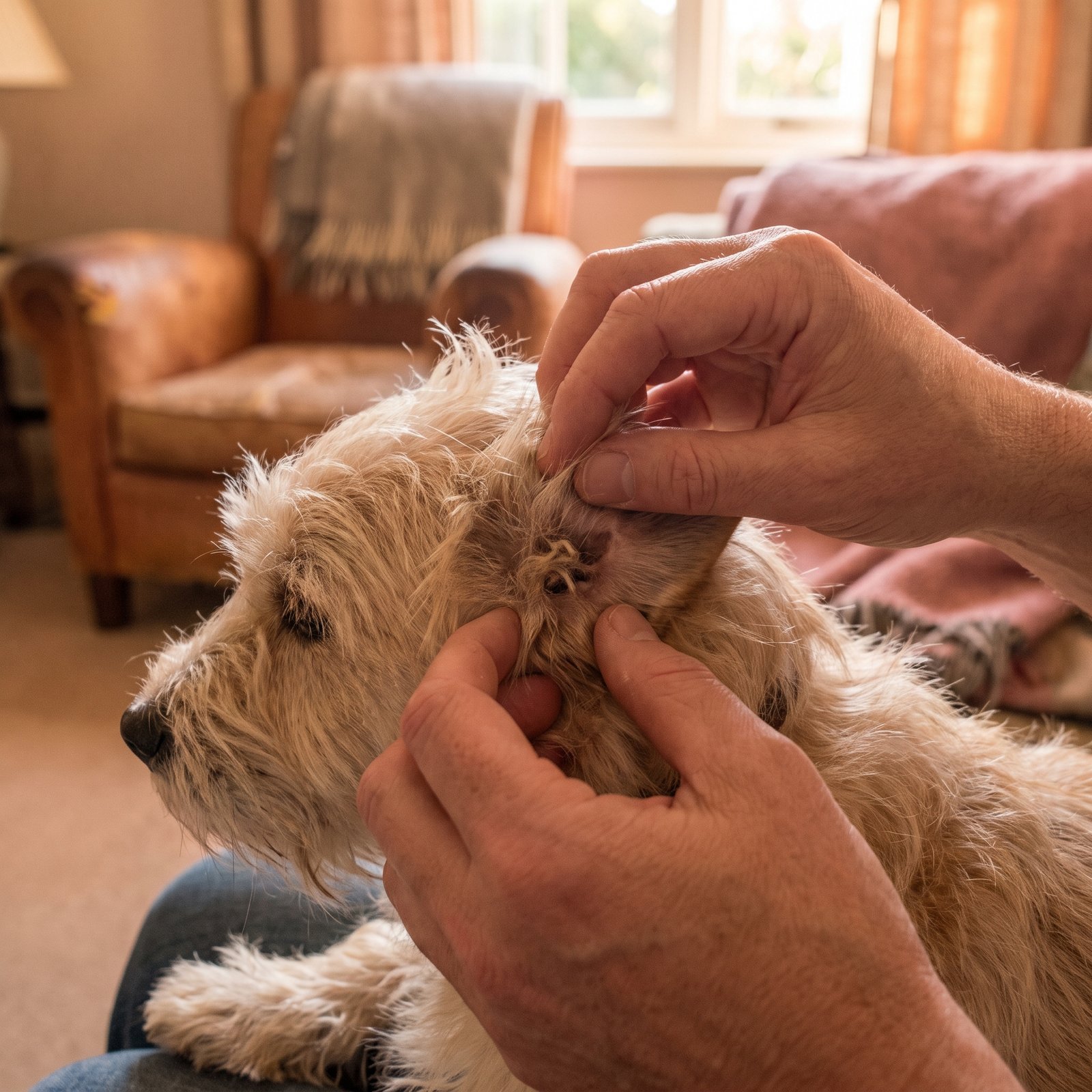
The trouble areas are almost always where there’s movement and rubbing. Behind the ears, under the collar, in the armpits, and down the backs of the legs. Anywhere skin folds or fur brushes against fur all day, a knot will start. Wearing a harness seems to invite the knots with Poppy.
Moisture is the other big one. A wet coat that dries without being brushed will knot up far quicker than a dry one, which is why muddy autumn walks and soggy camping weekends are prime knot season. If your dog has a soft, wavy, or double coat, you’ll see it more than someone with a smooth-coated dog. That’s not neglect, it’s just the fur she was born with.
The One Rule Before You Start: Never Bathe a Matted Coat
This is the mistake almost everyone makes, so it’s worth saying loudly. If your dog has a knot or a mat, don’t put her in the bath first.
Water gets into the tangle, and as it dries it pulls the fur even tighter. You end up with a mat that’s set like felt, right against the skin, and far harder to get out than it was before. A bath on a knotty coat can turn a five-minute job into a shave-down at the groomer.
Get the knots out first, then bathe her. Always that way round. If bath time is its own battle in your house, there’s more on that in my guide to bathing a dog at home.
How to Get Knots Out of a Dog’s Fur, the Gentle Way
Here’s the method that works without a fight. Work slowly, and stop the second it stops being comfortable for her.
Pick Your Moment (Calm Dog, Calm You)
Don’t do this when she’s just come in wired from a walk, and don’t do it when you’re already frustrated. Dogs read our mood in a heartbeat. Pick a quiet evening when she’s a bit sleepy, sit on the floor with her, and have a few treats to hand. If she only manages one knot before she’s had enough, that’s fine. You can do the next one tomorrow.
Loosen It First With a Detangling Spray
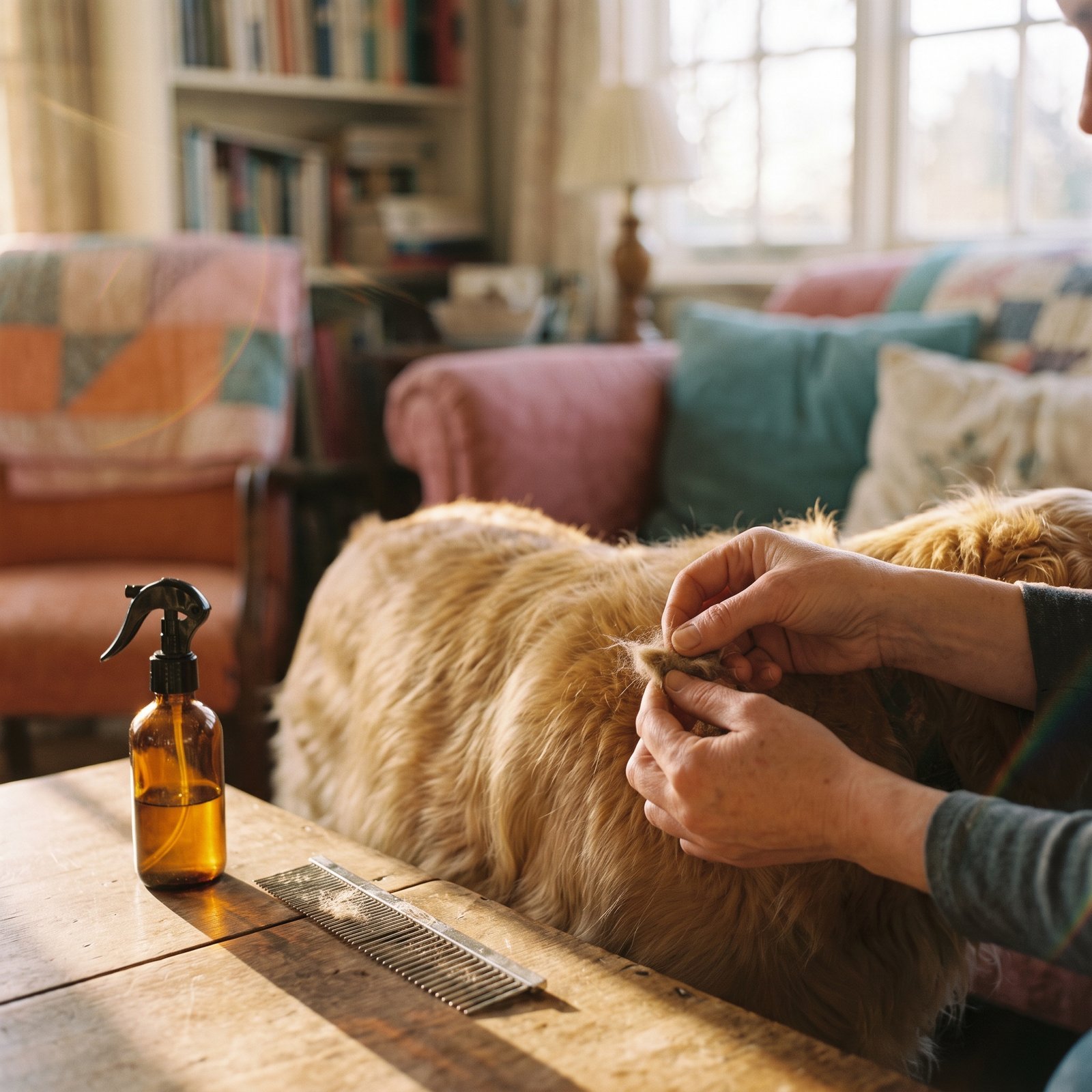
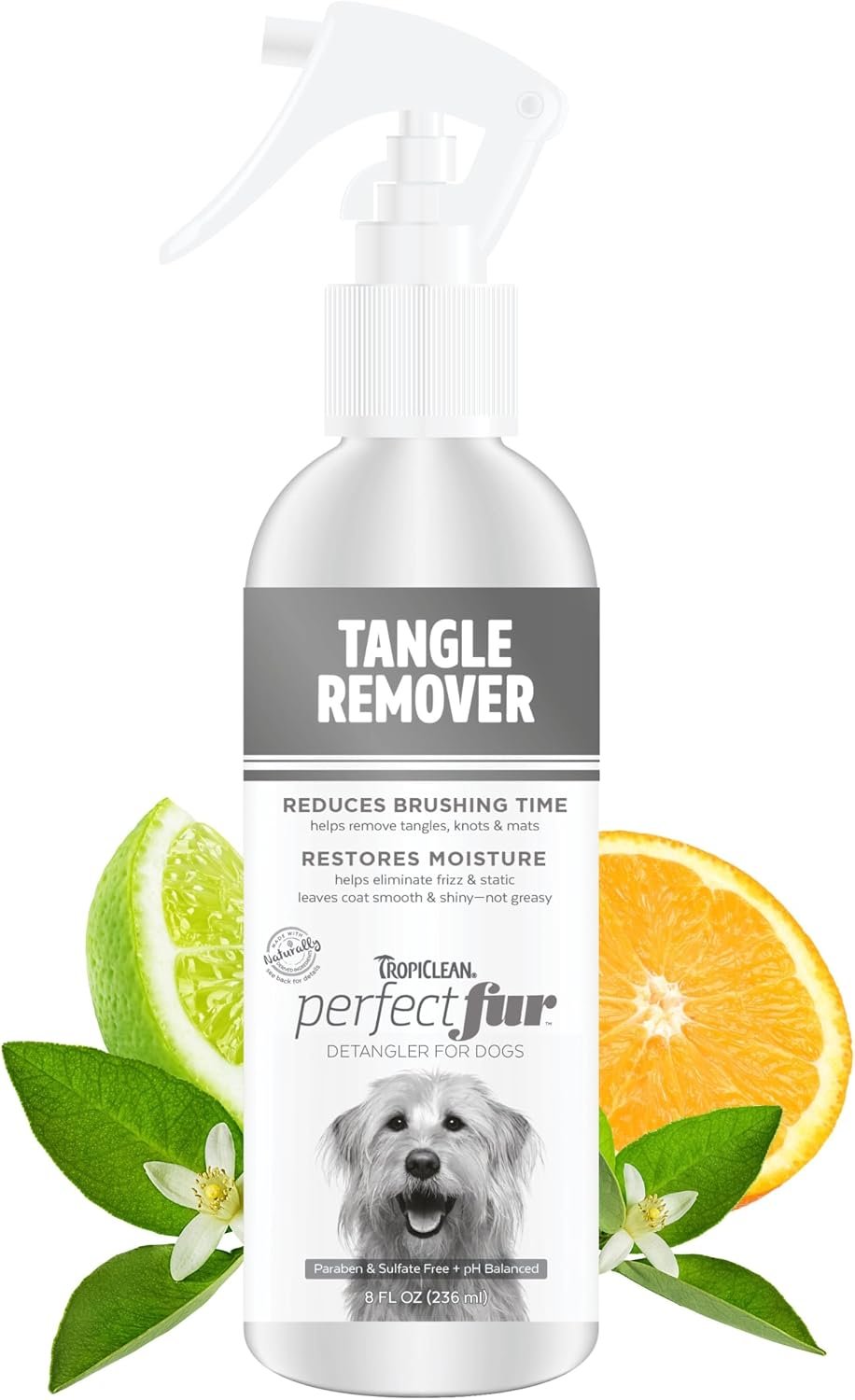
A light spritz of a dog detangling spray, or even a drop of coat conditioner worked in with your fingers, makes a real difference. It coats the strands so they slip past each other instead of dragging. Give it a few seconds to soak in before you touch the knot. This one step is the difference between fur that eases apart and fur that yanks.
Tease It Apart With Your Fingers
Before any tool goes near her, use your fingers. Hold the base of the knot with one hand, right against the skin, so you’re not pulling on her. With the other hand, gently pick at the outside of the knot and tease the strands apart, a little at a time. Holding the base is the trick that stops the yelp, because it takes the tension off her skin.
Comb From the Tip Inwards, Never Yank From the Root
Once it’s a bit looser, bring in a comb. Start at the very tip of the fur, the end furthest from her body, and work in small strokes. Then move a little closer to the skin, and a little closer again. Combing from the root down just drives the tangle tighter and pulls at her. Tip first, every time.
When to Bring In a Dematting Tool
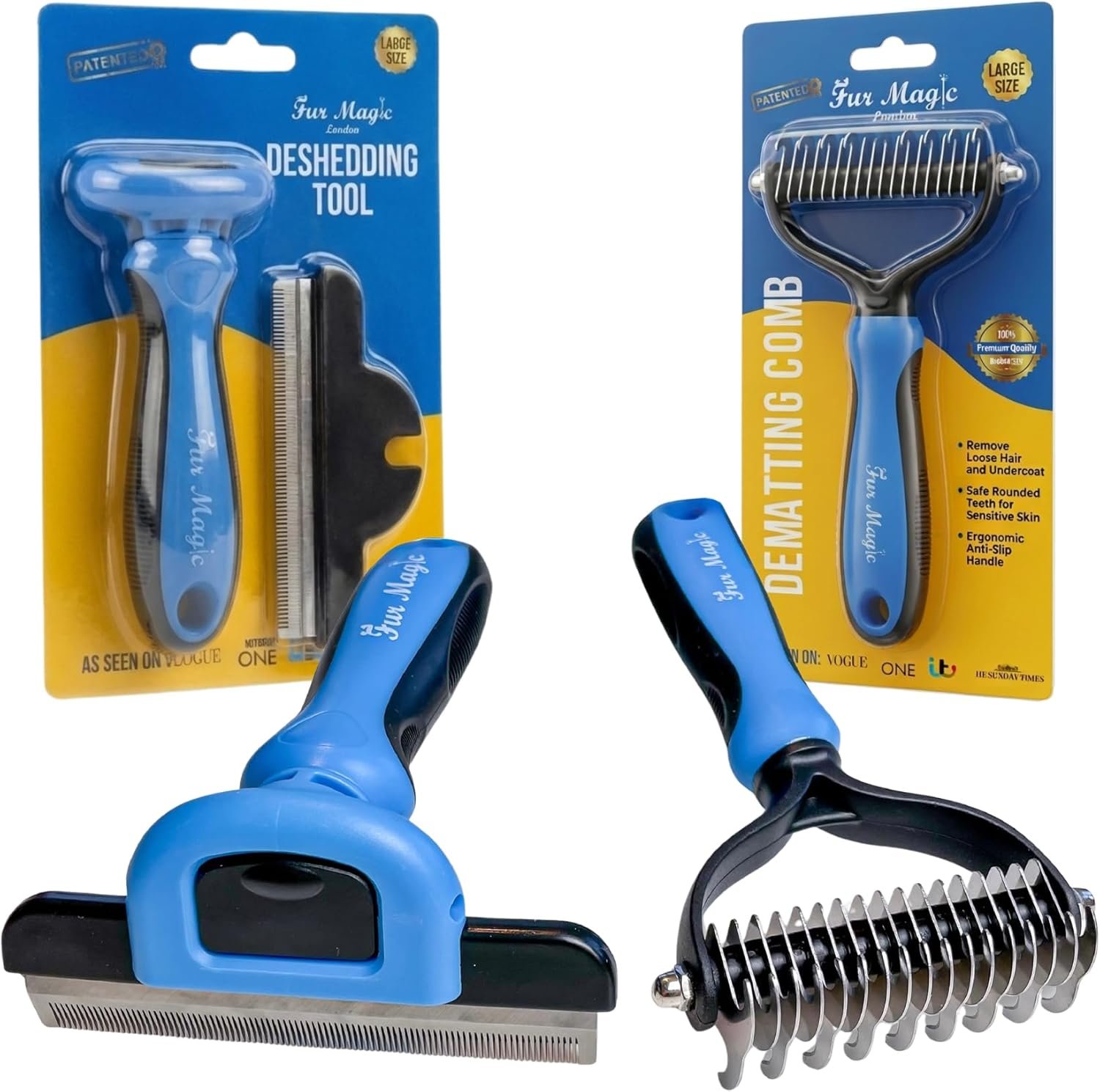
For a proper mat that fingers and a comb won’t shift, a dematting tool does the job. It has a row of curved blades that slice through the mat rather than dragging it out. Keep holding the base of the fur against the skin, work with short, gentle strokes, and go slowly. If you’re nervous about the blades near her skin, that’s a fair reason to hand this one to a groomer.
When to Stop and Call the Groomer
Some mats are past the home stage, and knowing when to stop is a kindness, not a failure. If the mat is tight against the skin, if the skin underneath looks red or sore, or if she’s genuinely distressed, put the tools down. Book the groomer. A good one will sort it quickly and kindly, and it costs a lot less than the guilt of hurting her.
The Tools That Actually Work (and What to Skip)
You don’t need a drawer full of gadgets. A few well-chosen bits will handle almost everything, and they’re all low-cost. Here’s what earns its place.
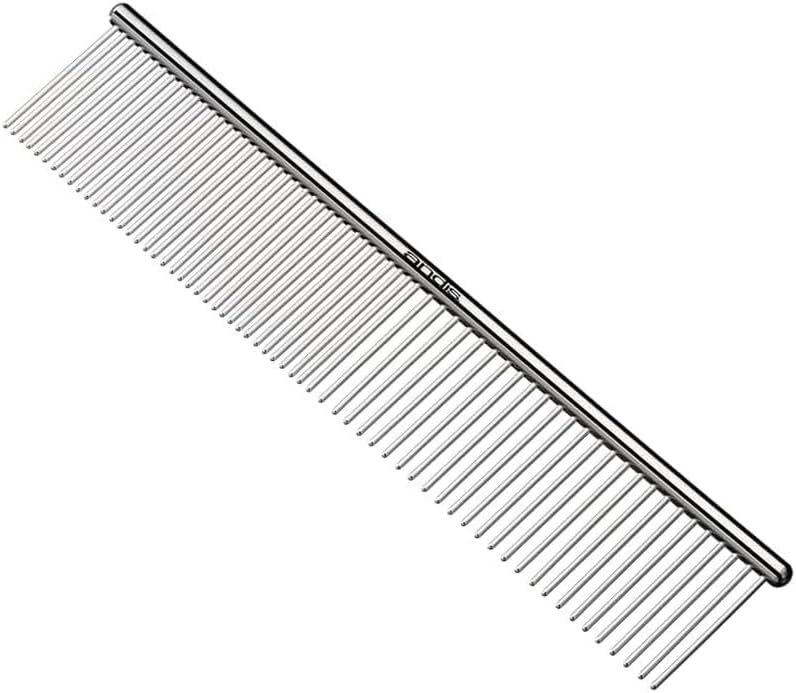
A detangling comb. A metal comb with a mix of wide and narrow teeth is the one tool I’d never be without. The wide end for the first pass, the fine end for finishing. It reaches down to the skin where the brush can’t.
A dematting tool. For the stubborn mats, this is the one that saves the day. The curved blades cut through the clump instead of tearing at it. Worth having in the drawer even if you only reach for it now and then.
A detangling spray. The cheap little bottle that does the heavy lifting. It softens the knot so everything else goes easier, and a bottle lasts ages.
What to skip? Human hairbrushes, which don’t reach the skin and just smooth the top. And scissors, please don’t reach for the scissors. It’s far too easy to nick the skin, because a dog’s skin lifts up into the mat and you can’t always see where the fur ends and she begins.
How to Stop the Knots Coming Back
Getting the knot out is half the job. Keeping them from forming again is where you actually win back your evenings.
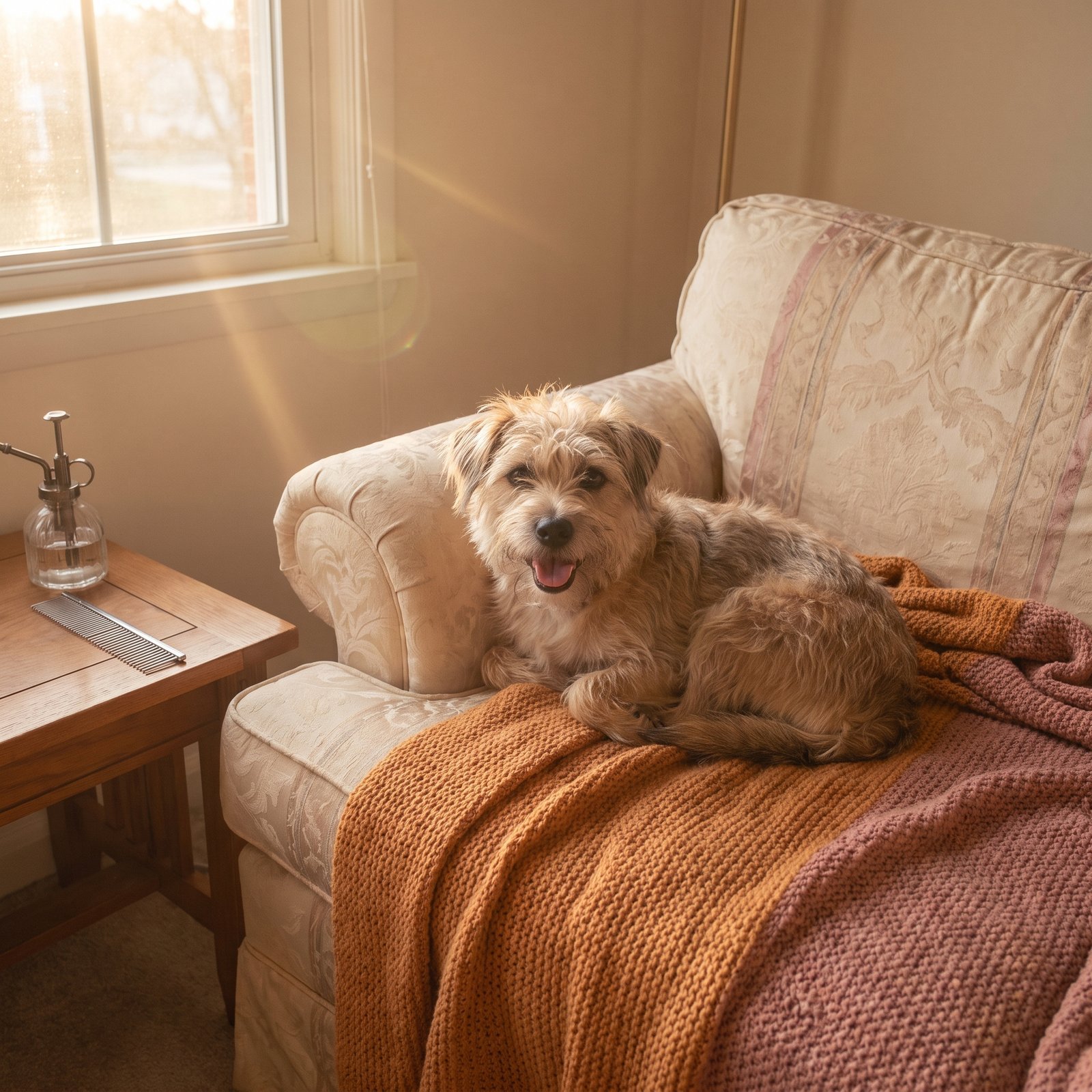
A quick brush every couple of days beats a long battle once a week. Five minutes, focused on those trouble spots, and you’ll catch a tangle while it’s still soft and easy. It’s a nice quiet moment with her, not a chore, once she trusts that it won’t hurt. If you’re new to the whole routine, my dog grooming for beginners guide walks through the rest of it.
The other habit worth building is a quick once-over after wet or muddy outings. If we’ve been out in the rain, or away camping and she’s been in and out of long grass and streams all weekend, I give her a brush before she dries off properly. Two minutes then saves a knotted mess the next morning. Catch it early and you’ll rarely see a proper mat again.
Your Turn
Knots in the fur are one of those small, unglamorous parts of dog ownership that nobody warns you about, and getting on top of them is easier than it feels when you’re mid-yelp with a comb stuck fast. Go gently, hold the base, work the tip first, and know when to hand it over. Your dog will thank you for it, in her own grumbly way.
So tell me: where does your dog knot up the worst? Behind the ears, the armpits, that tricky spot on the back legs? And has anything worked for you that I’ve missed? Pop it in the comments, I read every one, and it might just help the next person having the same battle in their kitchen. 🐾